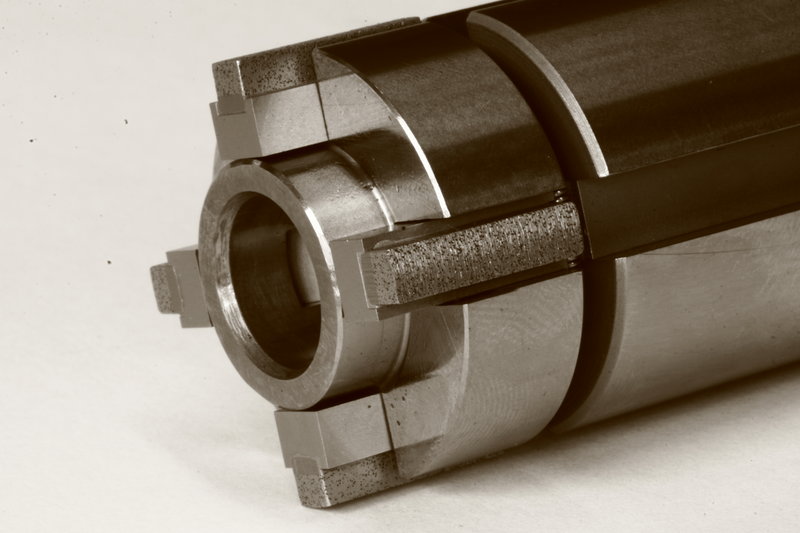


DIAHON develops and manufactures custom honing tools for bores and components that cannot be machined economically or reliably with standard tool concepts. Each design is matched to the component drawing, bore geometry, material, machining allowance, tolerances and required surface structure.
The range includes shell honing tools for interrupted bores, coaxial and step honing tools for multiple diameters, pivoting-stone honing tools for blind bores, and tandem honing tools for linked bores. Combinations of these principles and other application-specific designs are also possible.
Typical requirements for made-to-order honing tools include:
Tandem honing tools machine two spatially separated or functionally linked bore sections in one coordinated process. Honing wheel forks is a typical application. The tool structure, guidance and honing-stone configuration are selected so that both machining areas can be reached reliably while the specified dimensional and geometrical tolerances are maintained.
DIAHON application engineers define the tool principle, honing stones, guide elements, expansion system and interface to suit the component and machine. Custom honing tools can be configured for machine systems from manufacturers including GEHRING, NAGEL, KADIA, SUNNEN, Delapena, Nissin, Fuji and Bates.
For a technical assessment, please provide a component drawing and details of the material, initial bore, machining allowance, tolerances, required surface and existing machine. Send your enquiry to werkzeug[at]diahon.de.
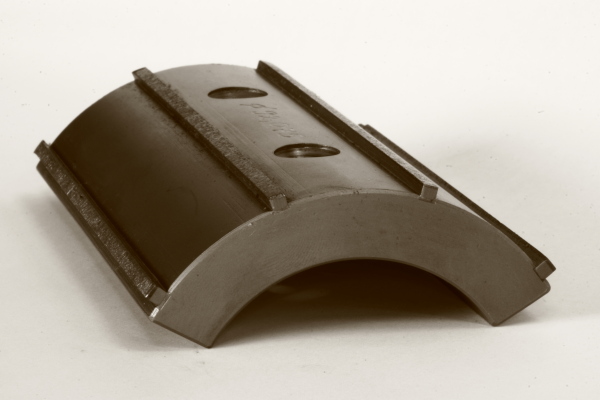
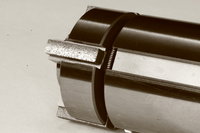
Shell honing tools can realise their specific advantages especially with interrupted bores (e.g., two-stroke cylinders with open overflow channels). The shell segments will always cover the large interruptions in these bores, so that the tool is always well guided. Other applications are the machining of hydraulic tubes with heavy rifling from the pre-operation and drilling with longitudinal grooves.
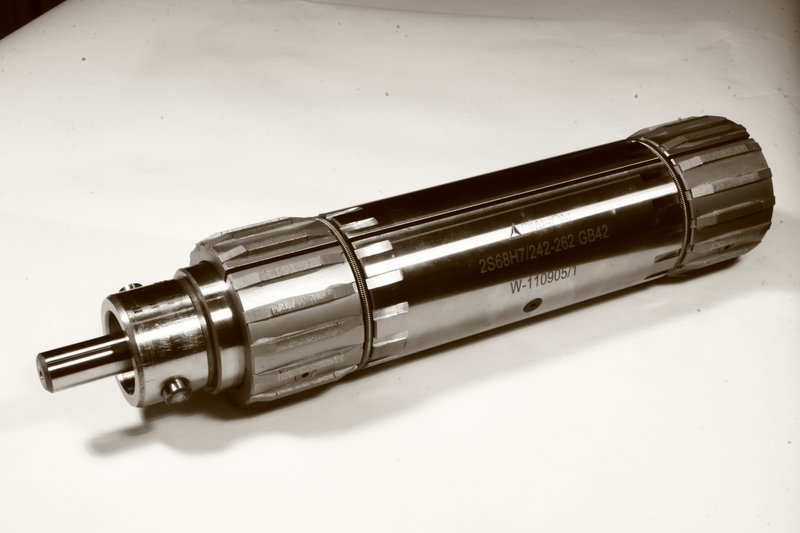
Coaxial honing tools (step honing tools) are used for parts with two or more different diameters to be honed. Both diameters are machined simultaneously with one tool. This honing tool principle ensures maintaining very tight tolerance requirements of concentricity of the bores.
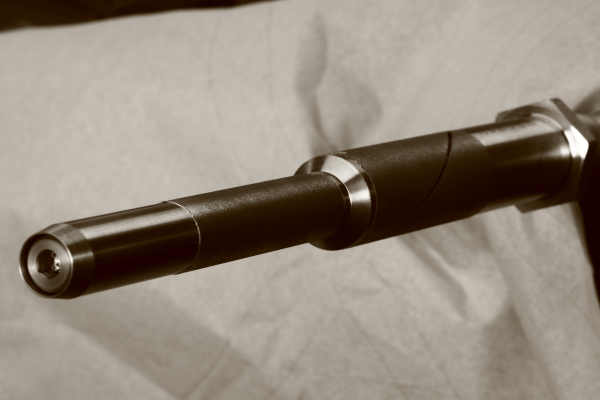
In blind bores, cylindricity is normally more difficult to maintain at the end of the bore. One option for generating cylindrical bores is the use of swivel-stone honing tools. These tools swivel out the honing stones on the end of the honing tool body and thus always expand the tool the most at the bottom of the bore. An operation with a regular cylindrical expansion honing tool should always follow after machining with a swivel-stone honing tool.